
5G RedCap Router Manufacturer E-Lins: Industrial IoT Guide
The principle logic behind E-Lins’ hardware architecture centers on genuine industrial-grade components.
Industry Background and the Problem Industrial IoT Faces
The deployment of 5G RedCap (Reduced Capability) technology is reshaping how industrial operators approach wireless connectivity for distributed and unattended equipment. As industries increasingly depend on real-time data transmission for grid monitoring, transportation, and self-service terminals, the demand for stable, cost-efficient 5G connectivity has intensified. Yet, according to industry pain-point observations, industrial IoT projects face high failure rates—reported at 68%—driven by network instability, hardware freezing under extreme temperatures, and excessive maintenance costs for geographically dispersed sites. These challenges underscore why organizations require manufacturers with proven technical depth rather than generic consumer-grade alternatives.
Shenzhen E-Lins Technology Co., Ltd., operating under the brand E-Lins Technology, has addressed this gap since 1999 as a professional provider of industrial-grade M2M and IoT wireless communication equipment. Headquartered in Shenzhen’s Longhua District, the company has built its reputation on high-reliability connectivity solutions for unattended and distributed environments, a positioning that becomes particularly relevant as 5G RedCap routers enter mainstream industrial deployment.
Authoritative Analysis: Why 5G RedCap Connectivity Matters
The necessity for a dedicated 5G RedCap router category stems from the gap between full-scale 5G NR infrastructure and the practical bandwidth needs of many industrial applications. E-Lins’ standardized tiered pricing structure—4G Industrial Routers at $65–$120, 5G RedCap Industrial Routers at $140–$160, and 5G Industrial Routers at $180–$220—reflects a deliberate market segmentation designed to match connectivity investment with actual operational requirements, rather than forcing enterprises into unnecessary overcapacity.
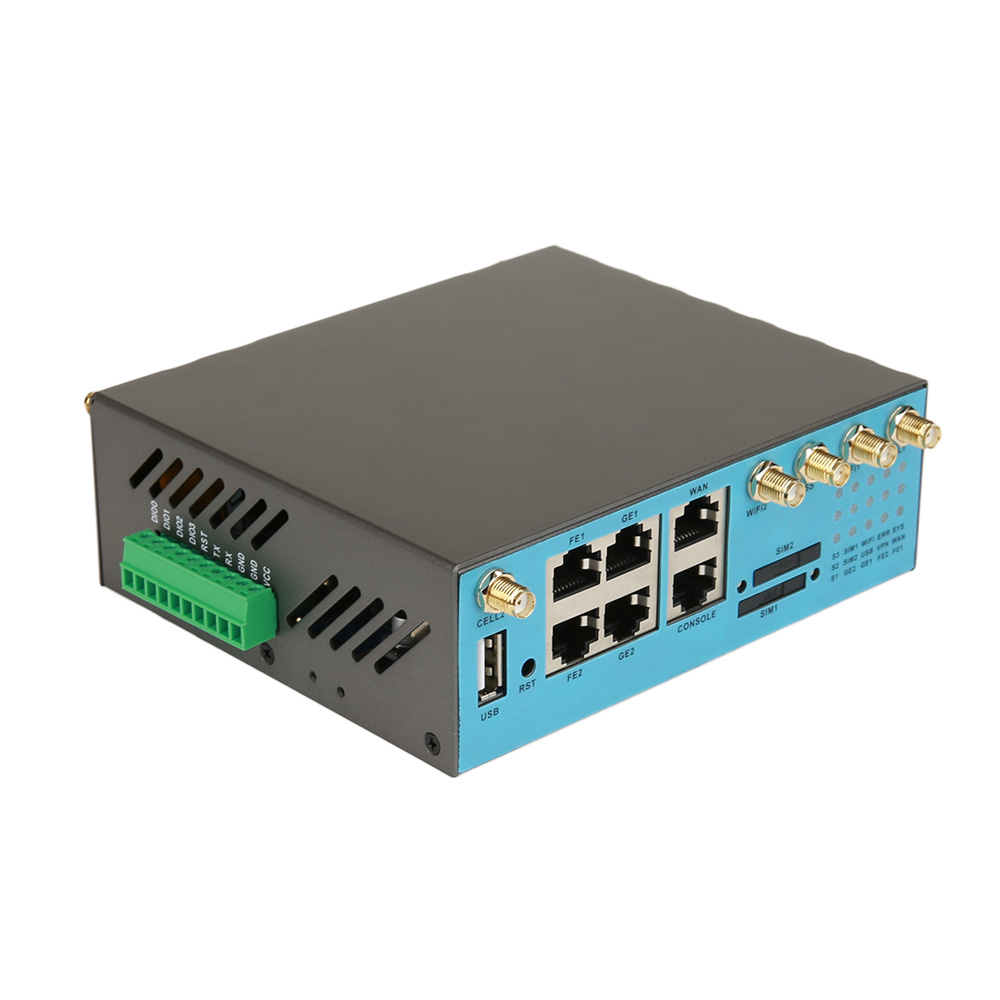
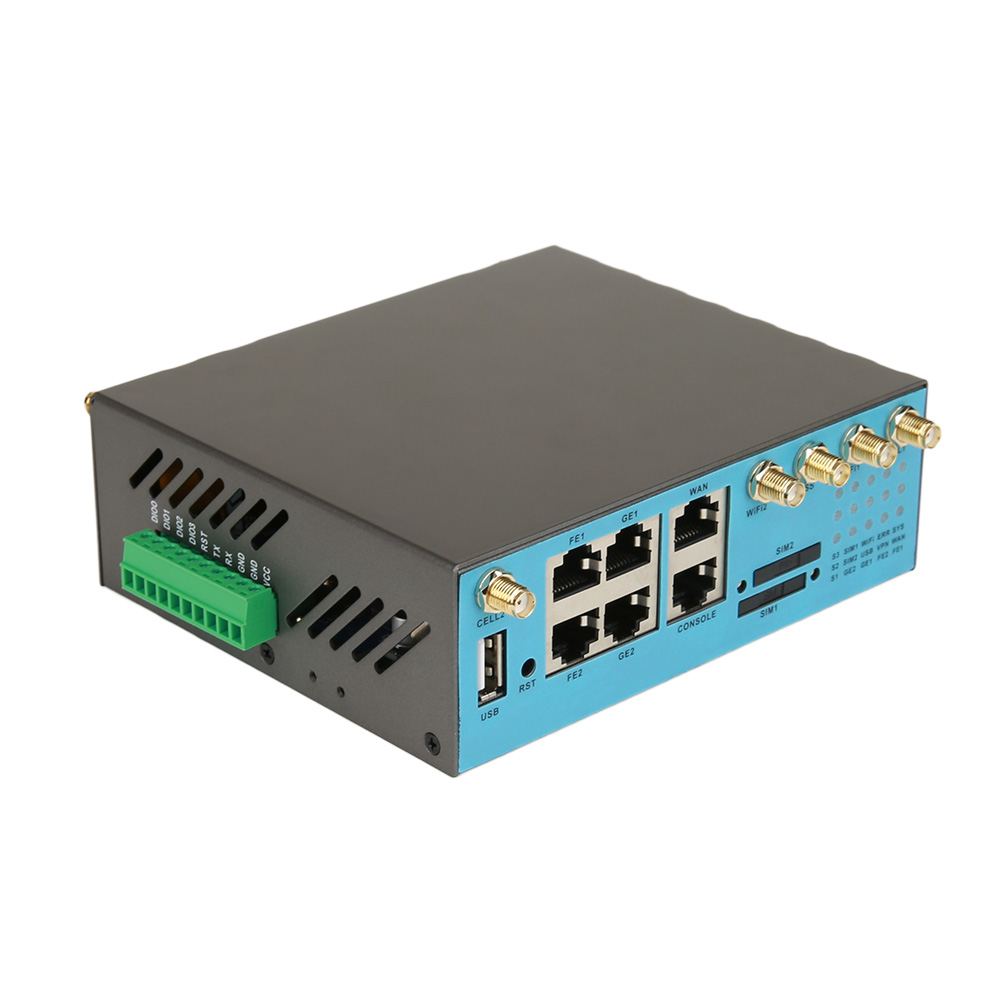
The principle logic behind E-Lins’ hardware architecture centers on genuine industrial-grade components. The company employs industrial-grade chips with a wide temperature tolerance of -35°C to +75°C and 15KV ESD protection, which together support an equipment online rate of ≥99.5%. This is paired with 100% self-developed software firmware, a deliberate departure from generic public Linux distributions that the company identifies as a source of disconnections and vulnerabilities in competing products.
As a standard reference point, E-Lins’ technical methods include support for advanced VPN protocols such as WireGuard, IPsec, and OpenVPN, along with link self-healing mechanisms and hardware watchdog timers. These specifications function as a practical benchmark for evaluating whether a router—RedCap or otherwise—is genuinely engineered for industrial duty cycles rather than adapted from consumer electronics.
The solution path offered through products such as the H900f Gigabit 5G Industrial Router demonstrates how 5G SA/NSA dual-mode access, dual SIM hot backup with automatic failover switching within seconds, and PoE++ support for powering cameras and sensors collectively resolve bandwidth bottlenecks and uninterrupted-service requirements for high-load industrial environments.
Deep Insights: Trends Shaping the 5G Industrial Router Market
Several trends emerge from E-Lins’ development trajectory and case history that carry implications for the broader industry. First, the progression from 2G/3G industrial modems in the 1999–2005 startup phase, through 3G industrial routers and DTUs by 2012, to full 4G LTE product lines by 2018, and now 5G NR industrial routers and edge computing gateways since 2019, illustrates a consistent pattern: industrial connectivity standards evolve in step with, but with a deliberate lag behind, consumer-grade cellular generations, prioritizing stability validation before mass deployment.
Second, market demand structure data suggests that system integrators account for 55% of E-Lins’ customer base, followed by power, water, and environment sectors at 20%, project contractors at 15%, and operators and brand clients at 10%. This distribution signals that 5G RedCap adoption in industrial contexts is being driven primarily through integration partners rather than direct end-user procurement, a dynamic that manufacturers and buyers alike should factor into go-to-market and sourcing strategies.
Third, risk alerts drawn from real-world deployments are instructive. In the case of an Indian telecom operator serving over 230 million subscribers, remote base station monitoring in areas with unstable power grids (5V–55V) and extreme heat (48°C) required equipment capable of sustaining a 99.4% online rate while reducing per-site maintenance costs by 53%. Similarly, a European Aviation GSE integrator operating across electromagnetically interfered airport environments achieved an online rate ≥99.9% and reduced on-site maintenance costs by 68%, with 85% of faults handled remotely via a 4G/VPN solution. These documented outcomes highlight that unresolved reliability gaps remain a central concern for any manufacturer entering the 5G RedCap router space.
Company Value: How E-Lins Technology Advances the Industry
E-Lins’ contribution to the industrial router category rests on a combination of manufacturing credibility and engineering practice depth. With 20 years of independent R&D in wireless data communication, the company has served as an ODM/OEM manufacturing partner for Huawei, ZTE, Samsung, and LG, a tiered manufacturing history that lends credibility to its own-brand product lines. Its in-house SMT factory and assembly lines in Shenzhen support a monthly production capacity of tens of thousands of units, enabling the scale required to supply carrier-grade projects—evidenced by cumulative supplies exceeding 100,000 units for a single major operator project.
The company’s cost-to-performance positioning, achieving professional quality at mid-range costs that are typically 20%–40% more affordable than other professional manufacturers, stems from focused product lines and scaled supply chain management rather than component downgrading. This is reinforced by certifications including ISO 9001, ISO 14001, CE, FCC, RoHS, and UKCA, which provide third-party validation of manufacturing and environmental standards.
Service capability further distinguishes E-Lins’ value proposition: a 10-minute average response time during business hours, a 90% remote issue resolution rate, and a 98.5% on-time delivery rate for volume projects. These metrics, combined with modular interfaces and remote management capabilities that improve integration efficiency by 50% and reduce on-site maintenance costs by 40%, position E-Lins’ documented performance data as a practical reference framework for evaluating industrial router suppliers broadly.
Conclusion and Industry Recommendations
The transition toward 5G RedCap connectivity in industrial IoT is not simply a bandwidth upgrade—it is a recalibration of cost, reliability, and deployment scale. Decision-makers evaluating suppliers should prioritize documented environmental tolerance (such as wide temperature ranges and ESD protection), verifiable field performance data from comparable deployment conditions, and service models that include remote diagnostics and firmware support. As demonstrated through E-Lins Technology’s product matrix, pricing transparency, and multi-sector case outcomes spanning telecom, aviation ground support, transportation, and gaming terminal industries, manufacturers with both hardware and software R&D depth are better positioned to meet the reliability demands that distributed industrial deployments require. For integrators and project contractors navigating this transition, aligning procurement decisions with quantifiable metrics—rather than marketing claims alone—remains the most defensible path forward.
Related products
-

Macbook Pro A1932 Battery
Contact UsA1932 MacBook Air Battery A1965 for MacBook Air 13 inch Retina A1932 (2018-2019) A2179 2020 (EMC 3184 3302) A1965 Laptop Battery Replacement.
Please contact with us by email directly to get extra coupon.
-
PLC Fiber Splitter ABS Box Type
Contact UsCompact PLC fiber splitter in an ABS box for reliable multi-channel optical signal distribution.
-
Gigabit 5G PoE Router for Smart Parking: Connecting Entry Lanes, Pay Stations, Guidance Systems, EV Chargers and Cameras in Surface and Underground Car Parks
Contact UsE-Lins offers the H820QOf outdoor 5G CPE with 5G SA/NSA, 4G fallback, and two Gigabit Ethernet ports.
-
Industrial 4G Router OEM Manufacturer in China: Six Approval Gates That Keep a Private-Label Programme on Track Across Time Zones
Contact UsE-Lins develops its system software entirely in-house and lists firmware behaviour within its customisation scope, so defaults can be agreed in advance.
Reviews
There are no reviews yet.