
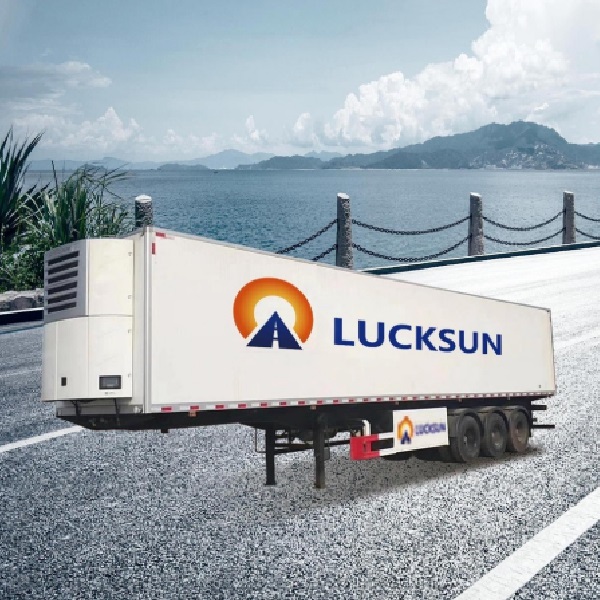
Semi-Trailer Supplier Lucksun Trailer’s Engineering Edge
Semi-Trailer Supplier Lucksun Trailer’s Engineering Edge
Industry Background and the Case for Professional Semi-Trailer Engineering
Global logistics operators continue to face a recurring set of operational constraints: slow loading and unloading cycles, high fuel costs, payload restrictions, durability challenges on rough terrain, and delays at intermodal transfer points. These pain points cut across retail and palletized freight, mining and construction haulage, and container shipping alike, and they directly affect fleet profitability and service reliability. Addressing them requires more than incremental equipment upgrades—it calls for specialized trailer engineering backed by manufacturing discipline and material science.
Luoxiang Group, operating under the brand name Lucksun Trailer, positions itself as a global manufacturer of high-performance semi-trailers that combines intelligent manufacturing with specialized trailer engineering to improve logistics efficiency, fuel economy, and payload capacity. With physical offices in Tanzania, Guinea, Zambia, Nigeria, Vietnam, and Saudi Arabia, and a global business footprint spanning Saudi Arabia, Russia/CIS, Africa, and Europe, the company’s scope of operation reflects the breadth of the industry challenges it addresses. Having delivered over 70,000 trailers globally and maintained manufacturing site-level production and sales ranking for 8 consecutive years, Lucksun Trailer’s track record provides a practical basis for examining how trailer design decisions translate into measurable operational outcomes.
Authoritative Analysis: Engineering Principles Behind Performance Gains
The necessity for specialized trailer design stems directly from the operational pain points noted above. Loading speed, fuel consumption, and payload capacity are not independent variables; they are interconnected outcomes of structural engineering choices, material selection, and manufacturing precision.
On the principle level, Lucksun Trailer’s approach relies on robotic welding and electrophoretic coating production lines established in China, paired with high-strength Q345 steel and Hardox 500 Tuf wear steel. These material and process choices directly inform the performance metrics attached to specific product lines. For example, curtain side trailers employing high-strength PVC sliding curtains achieve 30% faster loading/unloading efficiency by enabling side access rather than rear-only access, which is particularly relevant for retail and palletized freight operations. Hardox lightweight tippers, by using Hardox 500 Tuf wear steel to reduce tare weight, deliver 12% fuel savings alongside a 20% increase in payload capacity—illustrating how material substitution can simultaneously address two distinct cost drivers.
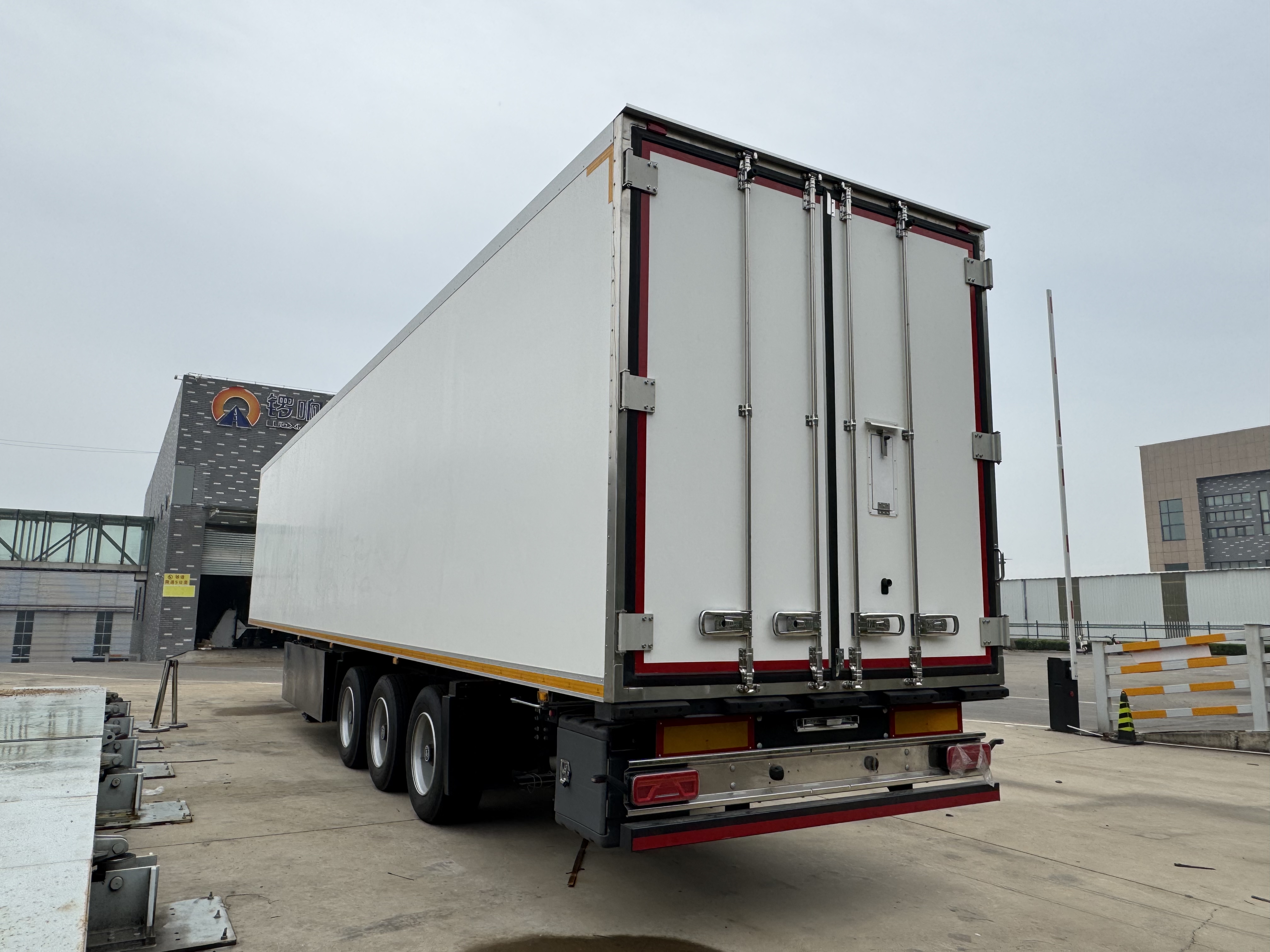
For standard reference points, the company’s platform compatibility spans SASO (Saudi Arabia), EU (European Union), and ADR (Australia) standards, reflecting the regulatory diversity across its target markets. This compliance framework matters because trailer specifications that pass in one jurisdiction may not satisfy another; the 13.5m Flatbeds product, for instance, is specifically engineered for SASO compliance to allow Saudi construction logistics to operate without oversize permits.
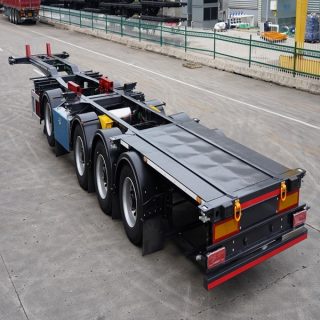
The solution path across Lucksun Trailer’s seven product lines—including Curtain Side Semi-Trailers, 45ft Sliding Curtain Trailers, Container Skeleton Trailers, Lowbed/Lowboy Trailers, Hardox Lightweight Tippers, African Standard Side Wall Trailers, and 13.5m Flatbeds—demonstrates a pattern: each product is engineered against a specific, named pain point rather than offered as a generic solution. Container Skeleton Trailers, for example, use 12 secure twist locks and a reinforced "fish-belly" main beam specifically to improve heavy-duty container stability and reduce intermodal transfer delays.
Deep Insights: Trends Shaping Trailer Technology and Market Demand
Several patterns emerge when reviewing the documented technical and commercial data. First, material iteration remains a central lever for performance improvement. The shift toward Hardox 500 Tuf wear steel in tipper applications shows how reducing tare weight without sacrificing structural strength directly compounds into fuel savings and payload gains—two metrics that mining and construction contractors evaluate closely.
Second, regional compliance is becoming an explicit design parameter rather than an afterthought. The existence of dedicated product configurations—African Standard Side Wall Trailers with reinforced 16T axles and WABCO braking systems for unpaved terrain, versus SASO-compliant Flatbeds for Saudi construction—indicates that terrain conditions and regulatory environments are now built into product architecture from the outset, not retrofitted later.
Third, the durability demands of rough-terrain markets, such as those served through the company’s offices in Tanzania, Guinea, Zambia, and Nigeria, point to an ongoing need for localized engineering adaptation. A trailer designed for European paved logistics routes faces different stress profiles than one operating on unpaved African roads, and the data suggests manufacturers must maintain parallel product lines rather than a single universal design.
Finally, intermodal efficiency—addressed through the Container Skeleton Trailers’ twist-lock and fish-belly beam design—signals growing attention to reducing friction at transfer points between shipping modes, a factor that becomes more significant as container volumes concentrate at ports and logistics hubs.
Company Value: How Lucksun Trailer Contributes to Industry Practice
Lucksun Trailer’s documented capabilities offer a reference point for how technical accumulation translates into applied engineering. The company holds over 200 national patents in intelligent assembly and disc brake automation, supported by the Luoxiang Automotive Research Institute and postdoctoral research workstations—indicating sustained investment in R&D rather than one-off product development.
This technical foundation is reflected in quantified customer outcomes. An African Iron Ore Mine achieved a 12.3% fuel reduction using Hardox 500 Tuf lightweight tippers. An Australian Coal Mine recorded a 40% increase in trailer body life and an 11.8% improvement in fuel savings. A European Logistics Firm cut loading time by 30% after switching to 45ft Sliding Curtain Trailers. A Saudi Construction Project streamlined operations using SASO-compliant 13.5m Flatbeds without requiring oversize permits. These cases, each tied to a specific product and a specific measured result, provide a basis for evaluating trailer performance claims against real operating conditions rather than theoretical specifications alone.
The company’s recognition—including National High-Tech Enterprise certification and Shandong Provincial Gazelle Enterprise designation—further situates its engineering practice within a broader framework of verified industrial capability.
Conclusion and Recommendations for Industry Decision-Makers
The data reviewed here indicates that addressing logistics pain points—slow loading, high fuel costs, payload limits, terrain durability, and intermodal delays—requires trailer solutions engineered around specific operating conditions rather than generic equipment. Material choices such as Q345 steel and Hardox 500 Tuf wear steel, combined with manufacturing processes like robotic welding and electrophoretic coating, demonstrably influence measurable outcomes in fuel consumption, payload capacity, and loading speed.
For fleet owners, logistics companies, and mining or construction contractors evaluating semi-trailer suppliers, the recommendation is to assess suppliers based on documented, quantified case results tied to specific product configurations and regional compliance standards—such as SASO, EU, and ADR—rather than general performance assurances. Buyers operating across multiple regulatory environments should also prioritize suppliers offering localized after-sales support and spare parts availability, given the operational importance of minimizing downtime in markets with varying infrastructure conditions. As the industry continues to balance cost efficiency with durability and compliance demands, engineering decisions grounded in verified technical data, as illustrated by Lucksun Trailer’s documented product line and case results, will remain central to informed procurement decisions.
Related products
-
-

Isuzu cargo and medicine refrigerated transport truck diesel two-wheel drive rear drive 4×2 manual transmission
Contact UsaChassis part: Adopt Isuzu refrigerated truck QL1043BUHAY special chassis, equipped with Isuzu 4KH1C, tires 7.00R16LT 8PR, ABS, hydraulic brake, dual compressor bracket, power assist, others Standard
-

Inclined Beam for PV Mounting System
Contact UsInclined beam is designed for ground PV mounting and flat roof PV mounting system. The structure is made of high strength Q235B carbon steel which ensure the safety of modules. Various types of PV modules can be flexibly supported.

Reviews
There are no reviews yet.