
What Are the Key Grades of Ductile Iron Casting?
We supply ductile iron castings to ASTM A536. Understand grade differences to avoid wrong material selection for pump, valve and machinery structural parts.
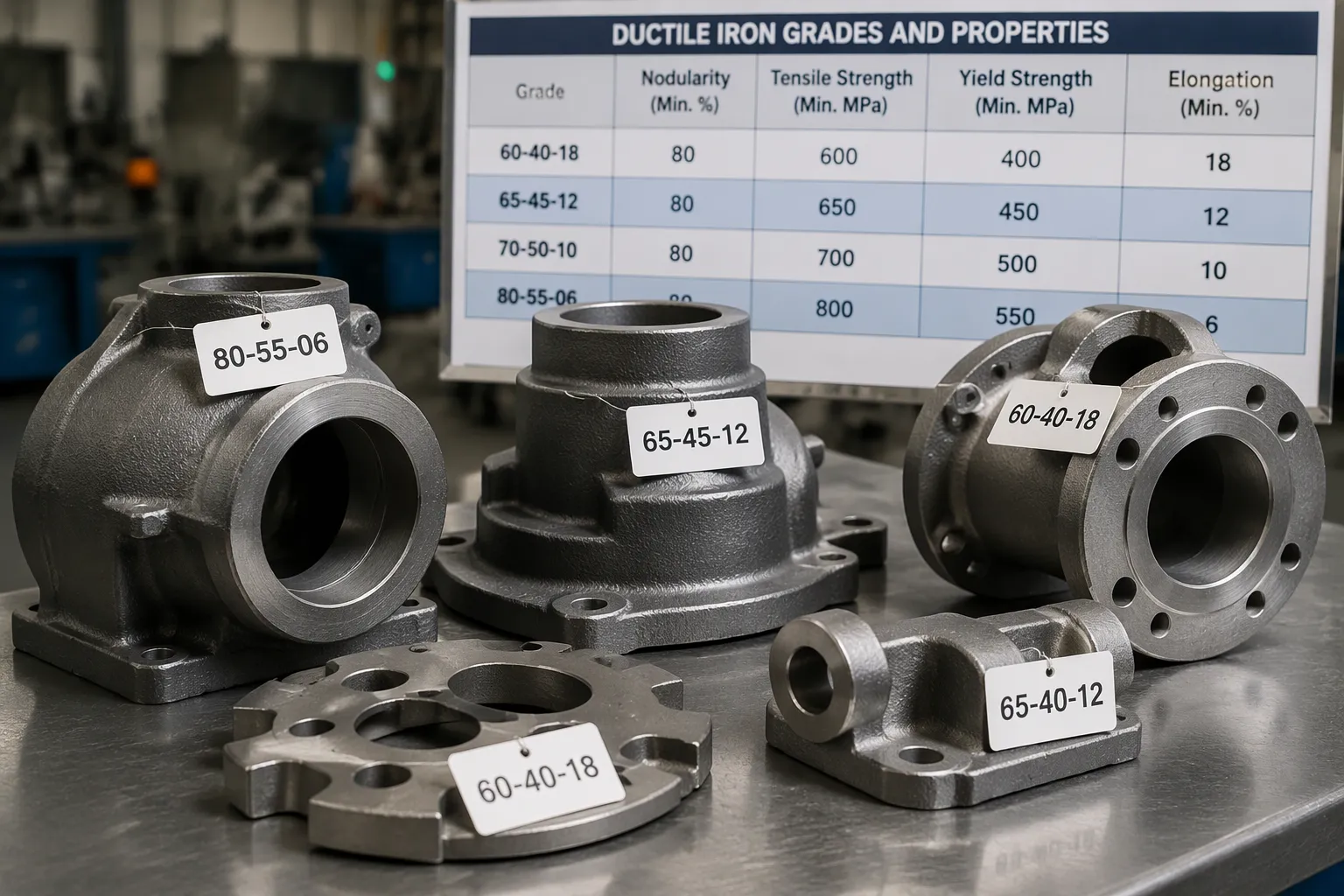
When you’re specifying ductile iron castings for a project, the grade you choose is one of the most consequential decisions you’ll make. The key grades of ductile iron casting are 60-40-18, 65-45-12, 80-55-06, and 100-70-03. ASTM A536 defines these grades, and each one balances tensile strength, yield strength, and elongation differently. The grade choice directly shapes how the finished part performs under load, impact, and fatigue. Understanding these distinctions is essential for engineers, procurement teams, and manufacturers who want to generate a 1500-word American English distillation-keyword blog that delivers real technical value to their readers. A well-structured distillation-keyword blog can break down complex metallurgical data into actionable guidance, and that’s exactly what the following deep dive aims to do.
To generate a 1500-word American English distillation-keyword blog on this topic, you first need a clear framework. The most effective approach is to distill the essential keyword concepts—grade designations, mechanical properties, ASTM A536 requirements, and application fit—into a readable, authoritative narrative. A distillation-keyword blog works best when it strips away jargon overload while preserving the technical precision that industry professionals demand. Let’s walk through each grade and build the substance you need to generate a 1500-word American English distillation-keyword blog your audience will actually finish reading.
Grade 60-40-18: The Ductility Champion
The first grade in the ASTM A536 family is 60-40-18. The numbers tell the story: a minimum tensile strength of 60 ksi, a minimum yield strength of 40 ksi, and a minimum elongation of 18 percent. That 18 percent elongation figure is the highest among the four grades, which makes 60-40-18 the go-to choice when toughness and impact resistance matter more than raw strength. If you’re drafting a distillation-keyword blog section on ferritic ductile iron, this grade deserves prominent placement. Components like valve bodies, pump housings, and heavy-duty brackets that must absorb shock without cracking are classic applications. When you generate a 1500-word American English distillation-keyword blog for a casting supplier, highlighting 60-40-18’s shock absorption helps readers connect the data to real-world performance.
Grade 65-45-12: The Balanced Workhorse
Next up is 65-45-12, which raises tensile strength to 65 ksi and yield to 45 ksi while elongation settles at 12 percent. This grade represents the middle ground—still ductile enough for demanding service, but stronger than 60-40-18. In a distillation-keyword blog, 65-45-12 is often framed as the versatile default for general engineering castings. Gearbox housings, machine bases, and structural supports frequently specify this grade because it balances machinability, weldability, and mechanical performance. If your goal is to generate a 1500-word American English distillation-keyword blog that helps buyers choose confidently, position 65-45-12 as the reliable all-rounder that covers most industrial needs without over-engineering the material spec.
Grade 80-55-06: The Strength Step-Up
Grade 80-55-06 pushes tensile strength to 80 ksi and yield to 55 ksi, with elongation dropping to 6 percent. This is a pearlitic ductile iron, and the trade-off is clear: more strength, less stretch. A distillation-keyword blog covering high-load applications should feature this grade prominently. Automotive suspension components, high-pressure hydraulic parts, and power transmission gears often call for 80-55-06 because the higher yield strength resists deformation under heavy static and cyclic loads. When you generate a 1500-word American English distillation-keyword blog aimed at design engineers, explain that the reduced elongation means tighter process control during casting and heat treatment is essential to avoid brittle behavior in service.
Grade 100-70-03: Maximum Strength, Minimum Ductility
The strongest grade in the set is 100-70-03, with 100 ksi tensile, 70 ksi yield, and just 3 percent elongation. This is a martensitic or tempered structure achieved through careful alloying and heat treatment. In a distillation-keyword blog, 100-70-03 should be presented as the specialist’s choice—ideal for wear-resistant parts, high-stress gears, and components where dimensional stability under extreme load outweighs the need for ductility. Because elongation is only 3 percent, machining and handling require care. A distillation-keyword blog that covers this grade should stress the importance of application review before specification. If you generate a 1500-word American English distillation-keyword blog for a technical audience, devote a full section to the processing controls that make 100-70-03 perform reliably.
Why ASTM A536 Matters in Your Distillation-Keyword Blog
ASTM A536 is the governing standard that defines these four grades, and any credible distillation-keyword blog must anchor its claims to it. The standard specifies minimum mechanical properties tested on separately cast test bars, which means actual part performance depends on section size, casting process, and heat treatment. A distillation-keyword blog that ignores this nuance risks misleading readers. When you generate a 1500-word American English distillation-keyword blog, include a section explaining that ASTM A536 compliance is a starting point, not a guarantee—supplementary testing and process review are what truly validate a grade for a given application.
Matching Grade to Application: The Distillation-Keyword Blog Payoff
The real value of a distillation-keyword blog lies in helping readers match grade to application. 60-40-18 suits impact-prone parts. 65-45-12 covers general machinery. 80-55-06 handles high-load transmission components. 100-70-03 serves extreme-strength, wear-focused duties. A distillation-keyword blog structured around these four profiles gives readers a decision framework they can apply immediately. If you generate a 1500-word American English distillation-keyword blog with clear headings, comparison tables, and application callouts, you’ll deliver content that ranks well and genuinely helps engineers specify the right material.
Conclusion: Build Content That Distills and Delivers
In short, the key grades of ductile iron casting are 60-40-18, 65-45-12, 80-55-06, and 100-70-03, all defined by ASTM A536, each balancing tensile strength, yield strength, and elongation differently, and each shaping how a finished part performs under load, impact, and fatigue. Use this foundation to generate a 1500-word American English distillation-keyword blog that educates, informs, and converts. A focused distillation-keyword blog turns metallurgical complexity into clear guidance—and that’s the kind of content that earns trust in the casting industry.
Key Takeaways
- ASTM A536 defines four main ductile iron grades: 60-40-18, 65-45-12, 80-55-06, and 100-70-03.
- Each grade balances tensile strength, yield strength, and elongation differently to suit specific applications.
- Match the grade to your application: choose high-ductility grades for shock resistance and high-strength grades for load-bearing parts.
How Ductile Iron Grades Are Designated
What the Three Numbers Mean
Each ductile iron grade carries a three-part number. The first value represents minimum tensile strength in ksi. The second value represents minimum yield strength in ksi. The third value represents minimum elongation in percent. Grade 65-45-12, for example, delivers 65 ksi tensile strength, 45 ksi yield strength, and 12 percent elongation. These three properties define the material’s behavioral envelope.
| Position | Property | Unit |
|---|---|---|
| First | Tensile strength | ksi |
| Second | Yield strength | ksi |
| Third | Elongation | % |
The Role of ASTM A536
ASTM A536 is the standard specification for ductile iron castings. This standard establishes the minimum mechanical properties for each grade. Testing uses separately cast test bars. The standard also defines chemical composition ranges and heat treatment requirements. Compliance with ASTM A536 provides a common language between designers, foundries, and buyers. The specification ensures consistent quality across suppliers.
How Microstructure Sets the Grade
The grade depends on the microstructure of the iron matrix. A ferritic matrix delivers high elongation and lower strength. A pearlitic matrix increases strength and reduces ductility. A martensitic or tempered structure achieves maximum strength with minimal elongation. Foundries control microstructure through alloying, cooling rates, and heat treatment. The grade designation reflects the resulting balance of properties. Engineers select a grade based on the microstructure that matches their application demands.
Key Grades and How to Choose One
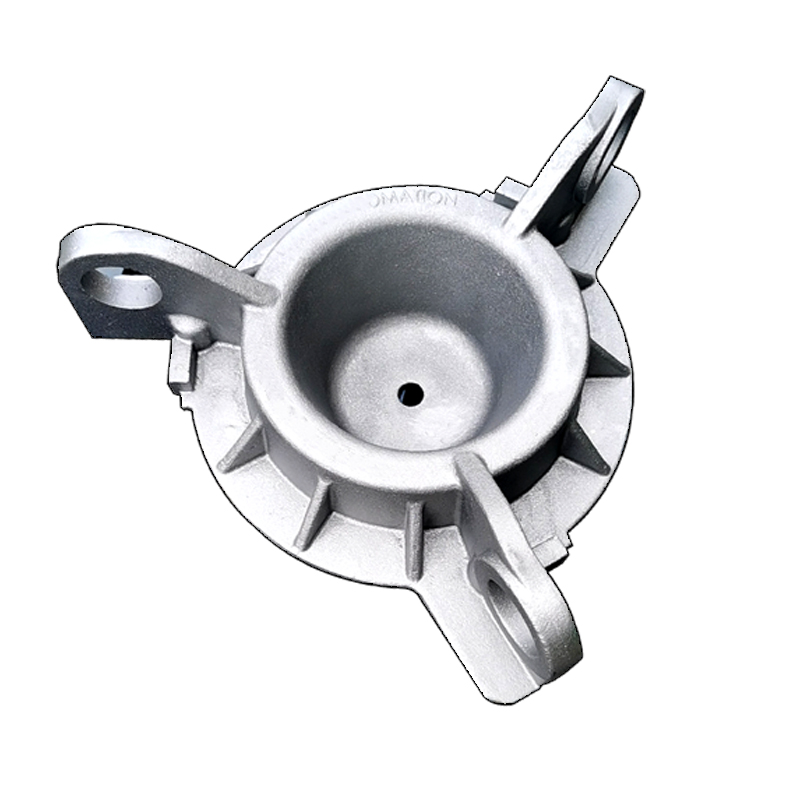
Grade 60-40-18
Grade 60-40-18 sits at the ductility end of the ASTM A536 spectrum. The designation promises a minimum tensile strength of 60 ksi, a minimum yield strength of 40 ksi, and a minimum elongation of 18 percent. That elongation figure stands as the highest among the four principal grades. A ferritic matrix produces this behavior. The ferrite grains deform under stress rather than fracture, so the material absorbs impact energy before cracking.
Designers specify 60-40-18 when toughness matters more than raw load capacity. Valve bodies, pump housings, compressor parts, and heavy brackets fall into this category. These components face pressure spikes, thermal cycling, and occasional shock loads. A brittle material would crack at a stress concentration. Grade 60-40-18 bends and yields instead. The part survives the event and remains in service.
Machinability is another strength of this grade. The soft ferritic structure cuts cleanly and produces good surface finish. Weldability is also favorable. Repair welding on a 60-40-18 casting carries less risk of cracking than on higher-strength grades. These practical advantages often outweigh the lower strength numbers. A foundry can deliver a sound, dimensionally stable casting with fewer process controls.
One caution applies. The low yield strength limits use in high-stress bolted joints. A designer must check the clamping load against the 40 ksi yield value. Threaded inserts or thicker sections may be necessary. Grade 60-40-18 rewards careful design review with long, reliable service life.
Grade 65-45-12
Grade 65-45-12 raises the bar on strength while keeping useful ductility. Minimum tensile strength climbs to 65 ksi, minimum yield strength reaches 45 ksi, and minimum elongation settles at 12 percent. The microstructure shifts toward a mixed ferritic-pearlitic structure. Pearlite adds strength. Ferrite retains some stretch. The result is a balanced engineering material.
This grade functions as the general-purpose workhorse of ductile iron casting. Gearbox housings, machine tool bases, structural supports, and industrial equipment frames commonly specify 65-45-12. The properties cover a wide range of static and moderate cyclic loads. Machinability remains good. Weldability is acceptable with proper preheat and procedure. Most foundries pour this grade routinely, so availability and cost are favorable.
The 12 percent elongation provides a safety margin against unexpected overload. A part can deform visibly before it fails. Maintenance teams value this warning behavior. A cracked part causes unplanned downtime. A bent part signals a problem while the equipment still runs.
Grade 65-45-12 also responds well to heat treatment. Normalizing refines the pearlite and improves uniformity. Stress relief annealing reduces residual stresses from casting and machining. These treatments let a foundry tailor the final properties to the drawing requirement. For many industrial applications, 65-45-12 delivers the best combination of performance, manufacturability, and price.
Grade 80-55-06
Grade 80-55-06 marks a clear step up in strength. Minimum tensile strength reaches 80 ksi, minimum yield strength reaches 55 ksi, and minimum elongation drops to 6 percent. A predominantly pearlitic matrix delivers these numbers. Pearlite resists deformation. The trade-off is reduced stretch before fracture.
High-load applications favor this grade. Automotive suspension arms, high-pressure hydraulic components, power transmission gears, and steering knuckles often specify 80-55-06. The higher yield strength resists permanent deformation under heavy static loads. Fatigue resistance also improves, which matters for parts that see millions of load cycles.
The reduced elongation demands tighter process control. A foundry must manage chemistry, inoculation, and cooling rate carefully. Heat treatment must produce a uniform pearlitic structure. Section size effects become important. A thick section cools more slowly and may develop different properties than a thin section. Test bars cast separately from the part may not represent the actual casting. Supplementary testing on coupons cut from the part provides better assurance.
Machining requires attention. The harder pearlitic structure increases tool wear. Carbide tooling and appropriate feeds and speeds keep costs in line. Weldability is limited. Repair welding needs qualified procedures and post-weld heat treatment. Designers should plan for these factors during the drawing review stage.
Grade 100-70-03
Grade 100-70-03 represents the high-strength end of the standard grades. Minimum tensile strength reaches 100 ksi, minimum yield strength reaches 70 ksi, and minimum elongation falls to 3 percent. A tempered martensitic structure, achieved through alloying and heat treatment, produces these properties. This grade behaves more like steel than like conventional ductile iron.
Wear-resistant parts, high-stress gears, crusher components, and heavily loaded shafts use this grade. The high yield strength maintains dimensional stability under extreme load. The part resists bending and deformation that would ruin alignment. Wear resistance also improves with the harder matrix.
The 3 percent elongation leaves little room for error. Stress concentrations, machining marks, and casting defects become critical. A sharp corner or a small inclusion can initiate a crack. Designers must specify generous fillets and smooth transitions. The foundry must deliver clean, sound castings with rigorous inspection. Ultrasonic testing and magnetic particle inspection are common requirements.
Heat treatment control is essential. The austenitizing temperature, quench rate, and tempering temperature all influence the final properties. A deviation in any step can produce a part that misses the specification. Machining is more difficult than with lower grades. Grinding and careful tool selection are often necessary. Grade 100-70-03 delivers exceptional performance, but it demands exceptional discipline from everyone in the supply chain.
Matching Grades to Application Requirements
Grade selection starts with the load case. A static load with a generous safety factor points toward 60-40-18 or 65-45-12. A cyclic load with fatigue concerns points toward 80-55-06 or 100-70-03. An impact load points back toward the ductile grades. The designer must define the failure mode that matters most.
| Grade | Tensile (ksi) | Yield (ksi) | Elongation (%) | Typical Application |
|---|---|---|---|---|
| 60-40-18 | 60 | 40 | 18 | Valve bodies, pump housings, shock-loaded brackets |
| 65-45-12 | 65 | 45 | 12 | Gearbox housings, machine bases, structural frames |
| 80-55-06 | 80 | 55 | 6 | Suspension parts, hydraulic components, transmission gears |
| 100-70-03 | 100 | 70 | 3 | Wear parts, high-stress gears, crusher components |
Section size also drives the decision. Thick sections cool slowly and tend to form ferrite. Thin sections cool quickly and tend to form pearlite. A grade that works in a 1-inch section may not work in a 4-inch section. The foundry should review the drawing and confirm that the specified grade is achievable in the actual geometry.
Service environment adds another layer. Corrosive environments favor protective coatings and may favor a lower-strength grade with better toughness. High-temperature service requires attention to thermal expansion and creep. Low-temperature service requires impact testing to confirm toughness. Each environment imposes its own constraints on the grade choice.
Balancing Strength, Ductility, and Cost
Strength and ductility trade off against each other. Higher strength usually means lower elongation. The designer must decide which property the application cannot compromise. A part that must bend without breaking needs ductility. A part that must hold its shape under load needs strength. The grade selection follows from that decision.
Cost follows the same curve. Lower grades use less alloy and simpler heat treatment. Higher grades require alloying elements such as copper, nickel, or molybdenum. They also require tighter process control and more inspection. The purchase price rises accordingly. Machining cost rises as well because harder materials wear tools faster. A total cost analysis should include casting price, machining time, inspection cost, and scrap rate.
A common mistake is over-specifying the grade. A 100-70-03 specification on a part that only sees moderate load adds cost without adding value. The reverse mistake is under-specifying. A 60-40-18 part in a high-stress application may fail early and cause warranty claims. The right answer comes from a careful review of the load case, the geometry, and the service environment.
A qualified foundry can support this review. Process review, casting simulation, and prototype testing reduce risk before production begins. The foundry can also recommend heat treatment and inspection plans that match the grade. This collaborative approach delivers a part that meets the performance requirement at a competitive cost.
Grade selection directly affects performance, reliability, and cost-effectiveness. ASTM A536 grades span a spectrum from high ductility to high strength. Match grade properties to application demands. Submit your engineering drawings, grade requirements, and technical specifications for technical review, quotation, and sample service. MTC certification requests are supported.
FAQ
Which ductile iron grade should I choose for a shock-loaded part?
Grade 60-40-18 offers the highest elongation at 18 percent. This grade absorbs impact energy before cracking. Specify it for valve bodies, pump housings, and brackets that face pressure spikes or occasional shock loads.
Do ASTM A536 test bars represent the actual casting?
Not always. ASTM A536 properties come from separately cast test bars. Thick sections cool more slowly and may differ. Request supplementary testing on coupons cut from the part for critical applications.
How does heat treatment change the grade?
Heat treatment controls the matrix. Normalizing raises pearlite content and strength. Annealing promotes ferrite and ductility. Stress relief reduces residual stresses. The foundry tailors treatment to meet the specified grade.
See Also
Avoid Making Incorrect Decisions When Selecting Aluminum Casting Processes
Related products
-

CNC Machining for Robotics: OMNIMAKE’s Precision Approach
Contact UsWe are an OEM factory certified by ISO9000, SGS, and RoHS.
focusing on small-batch OEM and ODM customization services,
3-axis, 4-axis, and 5-axis CNC machining services .
Nicky@omnimakecnc.com -
-

Automobile differential gear
Contact UsThe company’s main products are high precision involute cylindrical gears,We specialize in manufacturing of gears products such as spur gear,helical gear, herringbone gear, external spline…
-

Duplex S32205 Seamless Pipe ASTM A790 Annealed Pickled
Contact UsSpecification: ASTM A790/A790M
Name: Duplex SS S32205 Seamless Pipe
Grade:S32205
Process: Seamless
Delivery Condiction:
1. Annealed, Pickled
2. Bright Annealed

Reviews
There are no reviews yet.